
Best Fire TV Soundbars in 2026: 4 Models Compared
The Fire TV Soundbar Plus with subwoofer and surround sound speakers is our top pick for a full home theater experience, offering 5.1 channels, Dolby Atmos, and rear speakers in one package. We chose it based on its published specifications, which give it the most complete speaker array in the lineup. This guide compares all four Fire TV Soundbar models using the specs available in their listings.
4 picks from 4 soundbars that match this guide with a price we can quote today. Prices below are live, each shown with the time it was read.
Quick list
| # | Pick | Soundbar | Price |
|---|---|---|---|
| 1 | Best for small rooms | Amazon Fire TV Soundbar | $99.99 (as of 10/27/2026 05:36 PDT - Details) |
| 2 | Best for dialogue clarity | Amazon Fire TV Soundbar Plus | $189.99 (as of 10/27/2026 05:36 PDT - Details) |
| 3 | Best for movies | Amazon Fire TV Soundbar Plus with subwoofer | $309.99 (as of 10/27/2026 05:36 PDT - Details) |
| 4 | Best overall | Amazon Fire TV Soundbar Plus with subwoofer and surround sound speakers | $414.99 (as of 10/27/2026 05:36 PDT - Details) |
Which one is right for you?
- For small rooms: If you have a compact space and want to improve TV audio without adding extra boxes, the 2.0 model is a simple fit. See pick 1
- For movie lovers: The 3.1 model with a separate subwoofer and DTS:X support brings out the impact of action scenes and soundtracks. See pick 3
- For dialogue-focused listening: If you struggle to hear speech in shows and movies, the 3.1 model with built-in subwoofer has a clear dialogue feature. See pick 2
All 4 picks in detail
1 Best for small rooms
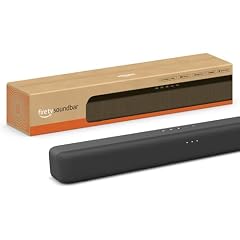
This 2.0 soundbar is the most compact and is the only one in the lineup without a subwoofer, making it easy to fit on a shelf or desk. It still supports DTS Virtual:X and Dolby Audio to add virtual surround from a single bar.
Pros
- 2.0 channels for a simple setup
- Supports DTS Virtual:X for virtual surround
- Bluetooth connectivity for wireless streaming
Cons
- No subwoofer, so bass is limited
- No Dolby Atmos support
- Lacks rear speakers for true surround
Good fit if
- Those with limited shelf space
- People who want to upgrade TV sound without a subwoofer
Skip if
- You want deep bass for movies
- You need Dolby Atmos
Verdict: A no-frills soundbar for small rooms that need a clear audio upgrade.
2 Best for dialogue clarity

Amazon Fire TV Soundbar Plus
- Channels
- 3.1
- Dolby Atmos
- Yes
- Subwoofer
- Built-in
$189.99 (as of 10/27/2026 05:36 PDT - Details)
This 3.1 model adds a built-in subwoofer for more bass and includes a clear dialogue feature, which is stated to enhance speech in TV shows and movies. It also supports Dolby Atmos for an immersive soundstage.
Pros
- 3.1 channels with built-in subwoofer for deeper bass
- Clear dialogue feature for better speech
- Dolby Atmos support
Cons
- No separate subwoofer, so you can't upgrade bass separately
- No DTS:X support
- No rear speakers
Good fit if
- People who watch a lot of dialogue-heavy content
- Those who want a single bar that doesn't need extra boxes
Skip if
- You want a more powerful bass with a separate subwoofer
- You want DTS:X for certain content
Verdict: A solid all-rounder that excels at making speech easier to hear.
3 Best for movies

Amazon Fire TV Soundbar Plus with subwoofer
- Channels
- 3.1
- Dolby Atmos
- Yes
- Subwoofer
- Separate
$309.99 (as of 10/27/2026 05:36 PDT - Details)
This model pairs a 3.1-channel bar with a separate wireless subwoofer for more impactful bass, and it adds DTS:X in addition to Dolby Atmos for multiple object-based audio formats. It's a step up in low-end power and format support.
Pros
- Separate subwoofer for deeper, more flexible bass
- Supports both Dolby Atmos and DTS:X
- 3.1 channels provide a dedicated center channel for dialogue
Cons
- Still no rear surround speakers
- Larger footprint due to the separate subwoofer
Good fit if
- Movie enthusiasts who want more dynamic sound effects
- Those who already have space for a subwoofer
Skip if
- You want true surround sound with rear speakers
- You want a one-bar setup without extra components
Verdict: A great choice for home theater sound from a 3.1 system with powerful bass and format support.
4 Best overall

Amazon Fire TV Soundbar Plus with subwoofer and surround sound speakers
- Channels
- 5.1
- Dolby Atmos
- Yes
- Subwoofer
- Separate
- Rear speakers
- Yes
$414.99 (as of 10/27/2026 05:36 PDT - Details)
This is the only model in the lineup with a full 5.1-channel configuration, adding two rear surround speakers to the separate subwoofer and bar. It supports Dolby Atmos and delivers a genuine surround sound experience right out of the box.
Pros
- 5.1 channels with rear surround speakers for true cinematic immersion
- Separate subwoofer for deep bass
- Dolby Atmos support
Cons
- Most complex setup with multiple components
- May overwhelm small rooms
Good fit if
- Home theater builders who want complete surround sound
- People who watch a lot of action movies and sports
Skip if
- You have limited space or prefer a minimalist look
- You only need a simple TV audio upgrade
Verdict: The most complete Fire TV Soundbar for a fully immersive movie and TV experience.
Specs compared
| # | Soundbar | Channels | Dolby Atmos | Subwoofer | Rear speakers | HDMI ARC or eARC |
|---|---|---|---|---|---|---|
| 1 | Amazon Fire TV Soundbar | 2.0 | not stated | not stated | not stated | not stated |
| 2 | Amazon Fire TV Soundbar Plus | 3.1 | Yes | Built-in | not stated | not stated |
| 3 | Amazon Fire TV Soundbar Plus with subwoofer | 3.1 | Yes | Separate | not stated | not stated |
| 4 | Amazon Fire TV Soundbar Plus with subwoofer and surround sound speakers | 5.1 | Yes | Separate | Yes | not stated |
How we chose these
We started with a pool of four Fire TV Soundbar models from the brand's catalog. We compared each on channel configuration (2.0, 3.1, 5.1), subwoofer type (built-in or separate), support for Dolby Atmos and DTS:X, and whether rear surround speakers are included. Prices shown on this page are read live from the retailer's listing and were not used in ranking. We have not tested any of these soundbars; our assessment is based solely on the specifications stated by the manufacturer.
What to look for
Channel configuration: 2.0, 3.1, or 5.1
The number of channels indicates how many separate audio outputs the soundbar system has. A 2.0 system has two speakers for left and right audio. A 3.1 system adds a dedicated center channel for dialogue and typically includes a subwoofer for bass. A 5.1 system includes rear surround speakers to place sound all around the room. For small rooms, 2.0 may be enough. For an immersive movie experience, 5.1 is the most complete.
Subwoofer: built-in or separate
A subwoofer reproduces deep bass, adding impact to explosions and music. Some soundbars integrate a subwoofer into the main bar to save space. Others come with a separate wireless subwoofer that you can place elsewhere in the room for more powerful and adjustable bass. If you have room for an extra box and want stronger low-end, a separate subwoofer is usually better.
Sound formats: Dolby Atmos, DTS:X, and more
Dolby Atmos and DTS:X are object-based audio formats that create a more three-dimensional soundstage. DTS Virtual:X is a simpler virtual surround effect that can be used with fewer speakers. Dolby Audio refers to a set of codecs that improve clarity and dynamics. Not all content supports these formats, but having more options gives you flexibility.
Connectivity: Bluetooth and more
Bluetooth allows you to stream music directly from your phone or tablet without wires. The 2.0 model lists Bluetooth connectivity, which is useful for casual listening. For TV audio, you'll typically use an HDMI or optical connection, though these soundbars may vary. Check the product's spec page for exact inputs. HDMI is a common interface for connecting audio systems to TVs; the HDMI standard is maintained by the HDMI Forum.
Dialogue enhancement
Some soundbars include a clear dialogue feature that boosts speech frequencies so you can understand conversations more easily without raising the overall volume. This is especially helpful for news broadcasts and drama series. If you often miss dialogue, look for a model that explicitly mentions this capability.
Questions
What is the difference between 2.0, 3.1, and 5.1 channels?
The numbers indicate how many speakers and subwoofers are included. A 2.0 system has two speakers. A 3.1 system adds a center channel for dialogue and a subwoofer. A 5.1 system adds rear speakers for surround sound. In this lineup, the 5.1 model offers the most immersive experience, while the 3.1 models include a dedicated center channel for clearer speech.
Do I need a separate subwoofer?
A separate subwoofer can provide deeper, more adjustable bass compared to a built-in one. If you have space and want stronger low-end for movies and music, a separate subwoofer is a good choice. If you prefer a tidy setup with fewer components, a model with a built-in subwoofer is sufficient for most rooms.
What are Dolby Atmos and DTS:X?
Dolby Atmos and DTS:X are object-based audio formats that add height and dimension to sound, making it feel more three-dimensional. DTS Virtual:X is a virtual surround effect that simulates this without additional speakers. These formats require compatible content and a receiver or soundbar that supports them.
Can I connect my phone to these soundbars via Bluetooth?
The 2.0 model lists Bluetooth connectivity, allowing you to stream music wirelessly from a phone or tablet. The other models may also support Bluetooth, but you should check the specific product listing to confirm. Bluetooth is a common feature for soundbars and uses the 2.4 GHz band to transmit audio.
How can I protect my hearing when using a soundbar at high volumes?
Prolonged exposure to sounds above 85 decibels can cause hearing loss, according to the National Institute on Deafness and Other Communication Disorders. Be mindful of the volume level and take breaks. Using a clear dialogue feature can help you hear speech at a lower overall volume, reducing risk to your hearing.
Update history
- : First published.